
A small, rose-colored stone discovered in the Sahara Desert has turned out to be a remarkable fragment of Mars' ancient history.
Named Teghaza 001, the meteorite weighs roughly 800 grams and was found in Mali in 2022. At first glance, it might seem like just another space rock. But a study published in Science on October 29, 2026, revealed something extraordinary: its minerals preserve a geological record stretching back more than 4.1 billion years.
And the most intriguing part isn't simply its age.
It's what this rock reveals about water on ancient Mars.
A piece of Mars from the dawn of the Solar System
Mars formed approximately 4.5 billion years ago. Yet most Martian meteorites found on Earth represent much younger geological activity, leaving scientists with relatively few physical samples from the planet's earliest history.
Teghaza 001 is different.
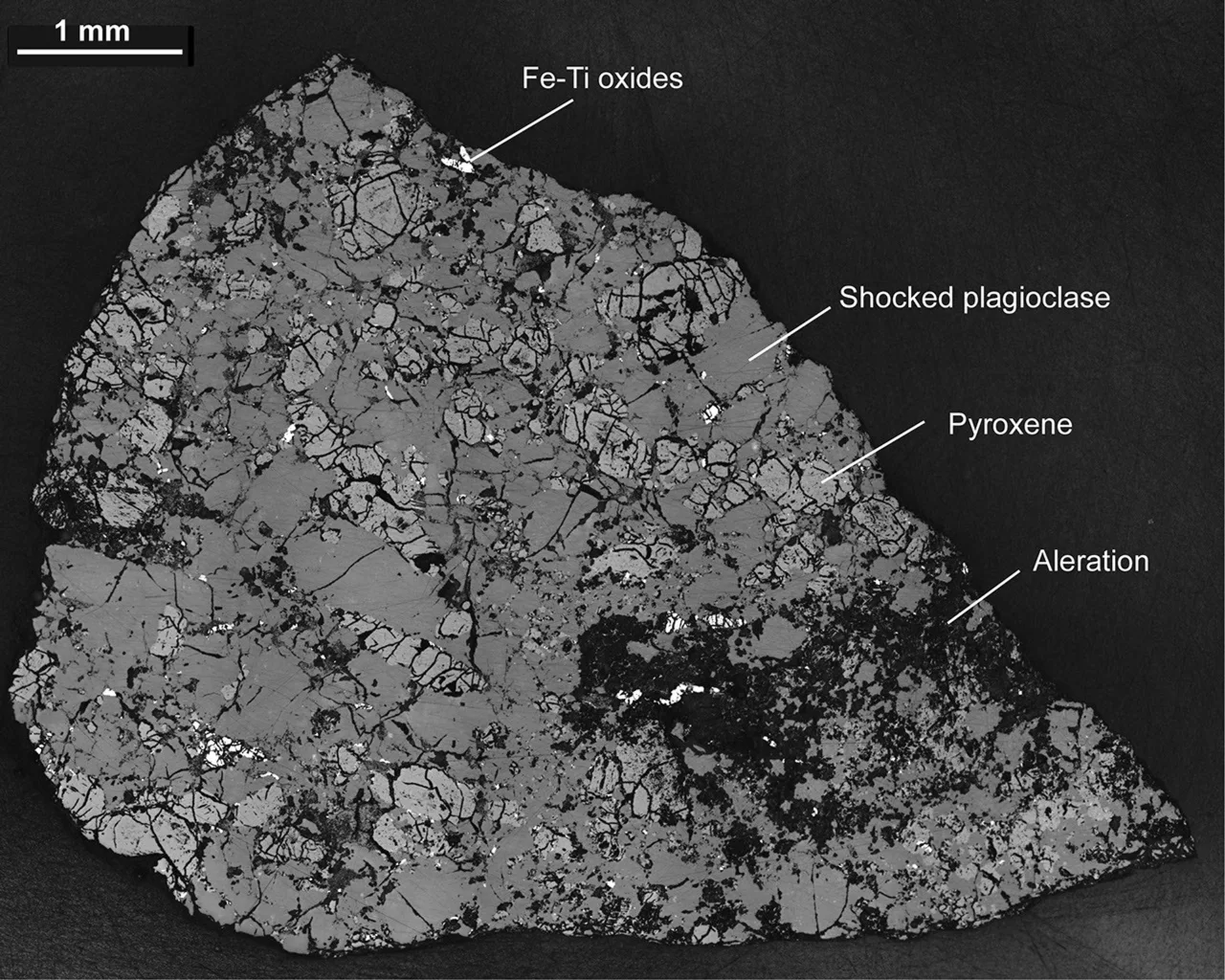
Researchers led by Yang Liu of NASA's Jet Propulsion Laboratory identified a rare combination of ancient igneous minerals. These minerals formed as molten rock cooled within the Martian crust, preserving information about conditions on the young planet.
Among them were tiny zircon crystals, minerals that can retain remarkably precise records of geological time.
By studying these crystals and other mineral grains, scientists determined that the meteorite's source rock formed at least 4.1 billion years ago.
That makes Teghaza 001 one of the oldest known Martian meteorites recovered on Earth.
The evidence hidden inside its minerals
Age alone would make this meteorite scientifically valuable. But its chemistry tells an even more interesting story.
The researchers found evidence that the rock had undergone chemical changes involving water while it was still on Mars.
Certain minerals contain unusual oxygen isotope signatures, indicating reactions with fluids during the planet's early history.
A separate study published in Science Advances in June 2026 examined hydrogen isotopes preserved within minerals in the same meteorite.
These measurements revealed signs of interaction between water associated with Martian magma and another water reservoir influenced by the planet's ancient surface environment.
The results suggest that water was circulating through parts of Mars' crust around 4.1 billion years ago.
This was not necessarily a simple story of rivers flowing across a surface. Water can also move underground, interact with hot rock and chemically transform minerals.
Teghaza 001 preserves evidence of those interactions.
Where on Mars did it come from?
Scientists know the meteorite originated on Mars because its isotopic composition matches the chemical fingerprints of other Martian samples.
But identifying its exact birthplace is far more difficult.
By comparing its mineral composition with observations from NASA's Mars Reconnaissance Orbiter, researchers identified 13 possible regions on Mars with similar characteristics.
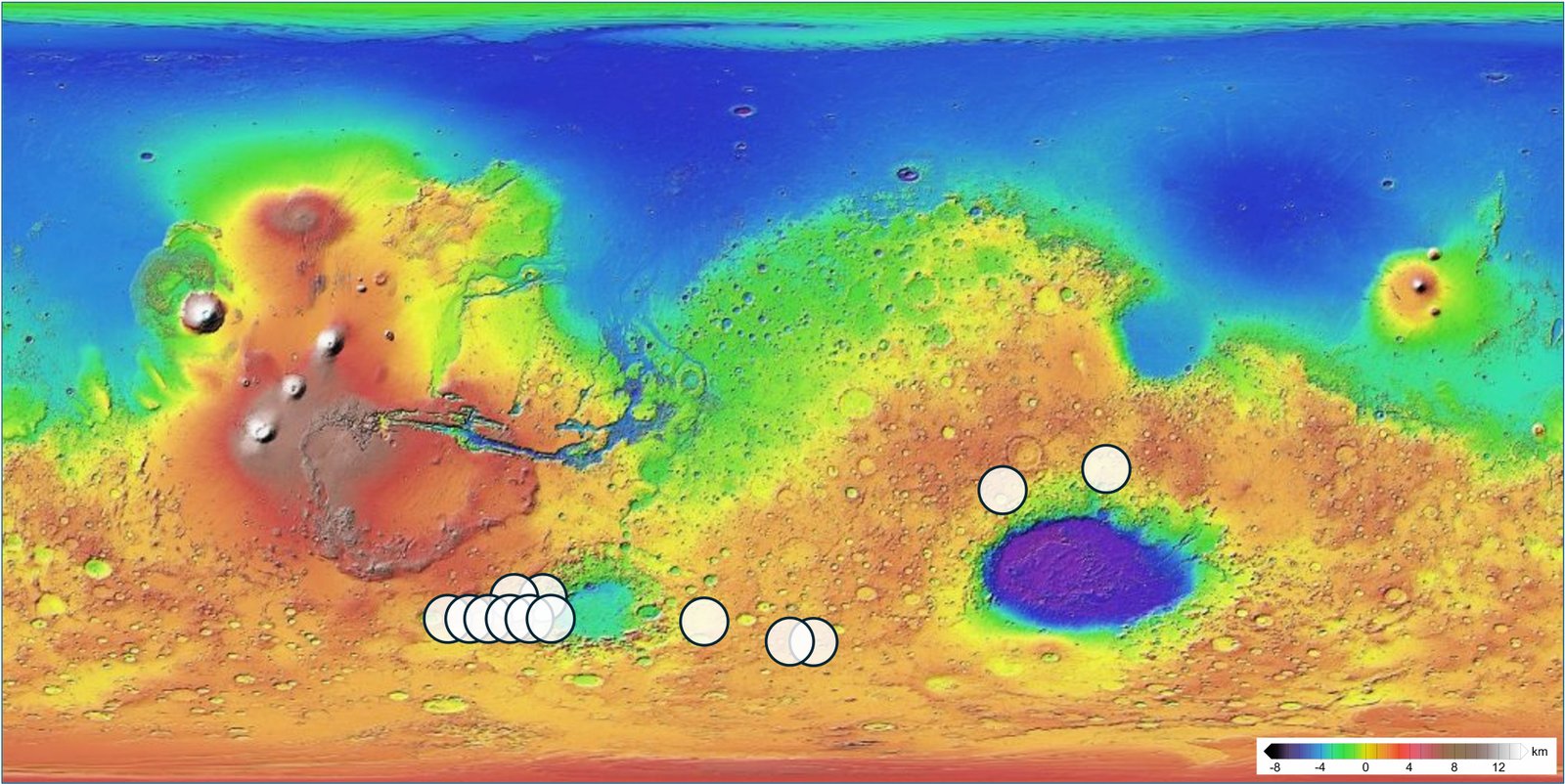
Several are associated with the ancient southern highlands, some of the oldest surviving terrain on the planet.
The exact location remains unknown.
At some point, a powerful impact launched the rock from Mars into space. After an uncertain journey through the Solar System, it eventually reached Earth, where it was discovered in the Sahara.
Does this mean Mars once supported life?
Not necessarily.
Evidence of ancient water is important because liquid water is one of the essential ingredients for life as we know it.
But water alone does not establish that life existed.
Teghaza 001 does not contain confirmed evidence of Martian organisms. Nor does it prove that the planet once had vast oceans covering its surface.
What it does provide is a rare physical record of a time when Mars was geologically active and water was interacting with its crust.
Together with evidence from orbiters, landers and rovers, this helps scientists reconstruct how the Red Planet evolved from a potentially more hospitable environment into the cold, dry world we observe today.
A small fragment of a much larger story
The most remarkable thing about Teghaza 001 is the amount of history preserved inside such a small object.
It records a chapter of Mars' evolution that unfolded billions of years before humans existed, long before Earth took on its present appearance.
And unlike distant observations made through telescopes or orbiting spacecraft, this evidence can be examined directly in laboratories on Earth.
A stone found in a desert has become a window into the earliest history of another planet.
The next discoveries may come not from finding another world, but from looking more closely at the fragments of one already in our hands.