
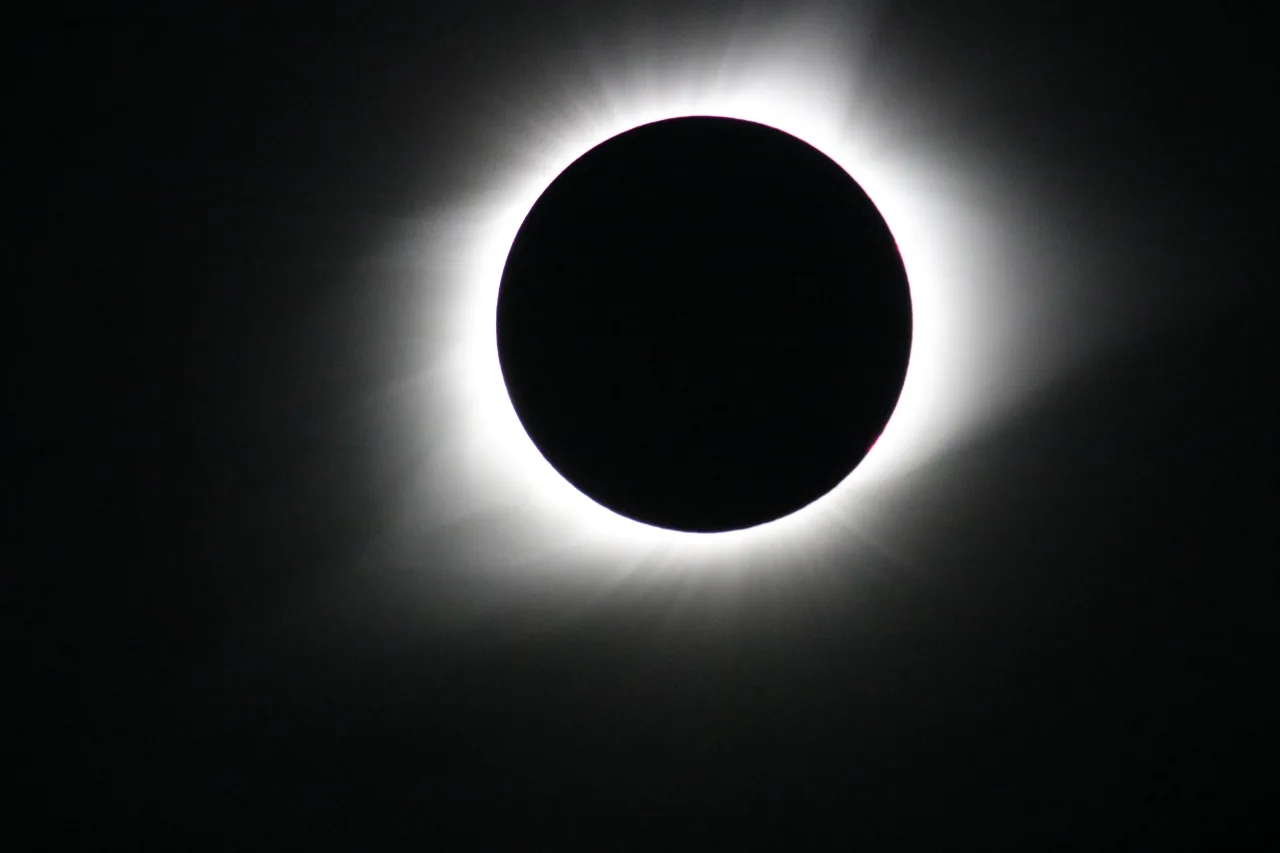
Imagine looking up at the sky during a solar eclipse, watching the Moon slowly move across the face of the Sun.
The daylight fades. The temperature drops. And for a few extraordinary minutes, the Sun disappears behind a dark circle, revealing its glowing outer atmosphere.
Now imagine a distant future when this can no longer happen.
Not because the Moon has vanished. Not because the Sun has stopped shining.
But because our Moon is slowly moving away from Earth.
And eventually, it will become too small in our sky to cover the Sun completely.
A cosmic coincidence that makes total eclipses possible
The Sun is approximately 400 times wider than the Moon.
But it is also roughly 400 times farther away from Earth.
This remarkable coincidence means that both objects appear almost the same size when viewed from our planet.
When the Moon passes directly between Earth and the Sun under the right conditions, it can completely hide the Sun's bright disk.
For a brief period, observers inside the Moon's darkest shadow experience a total solar eclipse.
The solar corona, normally overwhelmed by the Sun's brilliance, becomes visible as a delicate halo of light surrounding the black lunar silhouette.
But the alignment alone isn't enough.
The Moon must also appear large enough to cover the entire Sun.
And that depends on its distance from Earth.
The Moon is moving away from us
The Moon might appear to occupy the same place in our sky night after night, but its orbit is gradually changing.
Measurements show that the average distance between Earth and the Moon increases by approximately 3.8 centimeters every year.
That's roughly the speed at which fingernails grow.
It sounds insignificant.
But over millions of years, even a few centimeters per year can add up to enormous distances.
The process is driven primarily by tidal interactions between Earth and the Moon.
The Moon's gravity raises tides on Earth. Because our planet rotates faster than the Moon orbits it, tidal forces transfer a small amount of Earth's rotational energy and angular momentum into the Moon's orbit.
As a result, Earth's rotation gradually slows, while the Moon moves outward.
This isn't just a theoretical prediction.
Scientists have measured the changing distance using laser beams reflected from instruments left on the lunar surface during the Apollo missions and other lunar exploration programs.
By measuring how long the light takes to return, researchers can track the Earth-Moon distance with extraordinary precision.
Our nearest celestial neighbor really is drifting farther away.
What happens when the Moon becomes too small?
As an object moves farther away, its apparent size decreases.
The Moon is no exception.
Today, its orbit is elliptical rather than perfectly circular. Sometimes it appears slightly larger in our sky, and sometimes slightly smaller.
That difference already determines what kind of eclipse we can see.
During a total solar eclipse, the Moon appears large enough to cover the Sun completely.
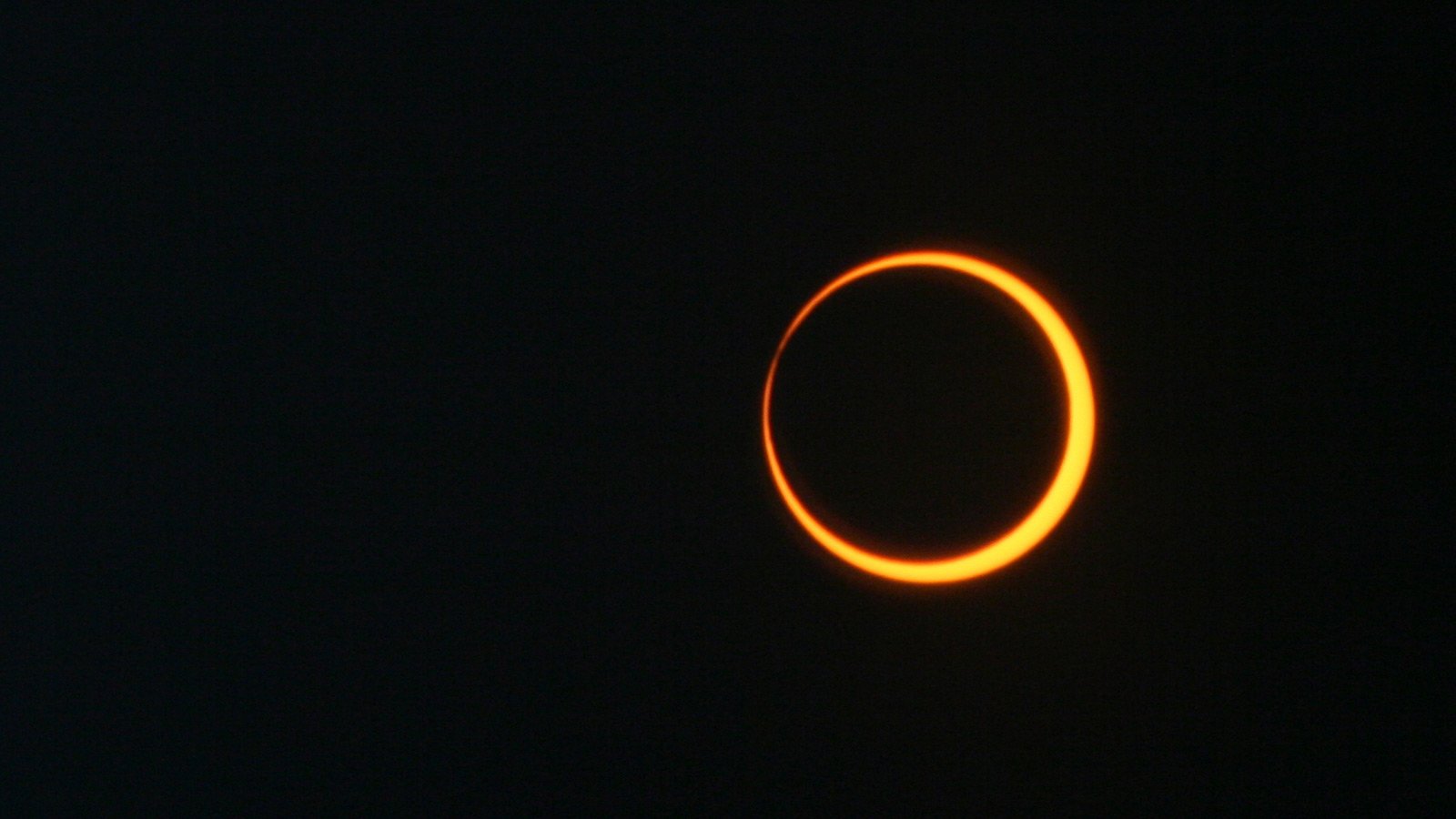
During an annular solar eclipse, the Moon appears smaller. A bright ring of sunlight remains visible around its dark silhouette, producing the famous ring of fire.
As the Moon's orbit gradually expands, total eclipses will become increasingly difficult to produce.
Eventually, even when the Moon is near its closest approach to Earth, it will no longer appear large enough to hide the entire solar disk.
At that point, the era of total solar eclipses will be over.
Annular and partial solar eclipses will still be possible.
But the magnificent moment when the Sun's bright surface disappears completely behind the Moon will no longer occur.
When will the last total solar eclipse happen?
NASA estimates that the Moon will need to move roughly another 23,500 kilometers away before total solar eclipses become impossible under the relevant orbital geometry.
If its current recession rate continued unchanged, that would take a little over 600 million years.
But the exact date cannot be calculated that simply.
The Moon has not always moved away at precisely the same rate. Tidal interactions evolve as Earth's oceans, continents and rotation change.
The Sun will also slowly evolve, affecting its apparent size as seen from Earth.
These factors introduce uncertainty into predictions extending hundreds of millions of years into the future.
The American Astronomical Society places the final total solar eclipse roughly a billion years from now, give or take several hundred million years.
So the last eclipse is not scheduled for a precisely known date.
What scientists can say is that the conditions making total solar eclipses possible are temporary on geological timescales.
Earth's sky looked different in the distant past
Travel billions of years backward, and the Moon would have appeared much larger in Earth's sky.
It formed much closer to our planet and has been gradually migrating outward ever since.
An ancient total solar eclipse would therefore have looked different from the near-perfect alignment we experience today.
The Moon could appear substantially larger than the Sun, hiding more of the surrounding solar atmosphere.
Our present era is unusual because the apparent sizes of the two objects are so closely matched.
The Moon can cover the Sun while still allowing us to see the spectacular corona extending beyond its edge.
This is not a permanent arrangement.
It is one chapter in the changing history of the Earth-Moon system.
Why this makes today's eclipses extraordinary
Total solar eclipses are already rare experiences for people on Earth's surface.
The Moon's darkest shadow crosses only a narrow region during each event, and totality at any particular location lasts just minutes.
Yet we live at a time when the geometry of our planetary system makes these events possible.
We can watch the Sun vanish behind the Moon, witness the corona with our own eyes and see the sky darken in the middle of the day.
Far in the future, that experience will no longer exist.
There will still be eclipses.
There will still be a Moon.
And the Sun will continue to illuminate Earth.
But there will come a day when the Moon casts the last total solar eclipse our planet will ever see.
We don't know exactly when that day will arrive.
We only know that, for now, we are living in the era when it is still possible.